SNOOPY FOREVER


This is really interesting to watch!
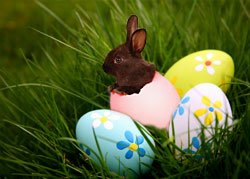
Of all the symbols associated with Easter the egg, the symbol of fertility and new life, is the most identifiable. The customs and traditions of using eggs have been associated with Easter for centuries.In Germany eggs were given to children along with other Easter gifts.
Different cultures have developed their own ways of decorating Easter eggs. Crimson eggs, to honour the blood of Christ, are exchanged in Greece. In parts of Germany and Austria green eggs are used on Maundy Thursday (Holy Thursday). Slavic peoples decorate their eggs in special patterns of gold and silver.
Austrian artists design patterns by fastening ferns and tiny plants around the eggs, which are then boiled. The plants are then removed revealing a striking white pattern. The Poles and Ukrainians decorate eggs with simple designs and colorus. A number of eggs are made in the distinctive manner called pysanki (to design, to write).
Pysanki eggs are a masterpiece of skill and workmanship. Melted beeswax is applied to the fresh white egg. It is then dipped in successive baths of dye. After each dip wax is painted over the area where the preceding coloru is to remain. Eventually a complex pattern of lines and colours emerges into a work of art.
In Germany and other countries eggs used for cooking were not broken, but the contents were removed by piercing the end of each egg with a needle and blowing the contents into a bowl. The hollow eggs were dyed and hung from shrubs and trees during the Easter Week. The Armenians would decorate hollow eggs with pictures of Christ, the Virgin Mary, and other religious designs.
Just as Santa Claus represents Christmas, a hopping life-size bunny with a basket full of colorful eggs is the quintessential image of Easter.
The original Easter bunny was probably associated with the Pagan equinox festival that came before Easter. The Saxons devoted the month of April to celebrating their goddess of spring and fertility, who was, not coincidentally, named Eastre. Eastre’s sacred animal was the hare - not surprising since the rabbit is one of the most common symbols of fertility and rebirth.
The colored eggs carried by today’s Easter bunnies have another, even more ancient origin. Eggs have long been associated with fertility and springtime festivals - for so long, in fact, that the precise roots of the association are unknown. Ancient Romans and Greeks used eggs in festivals celebrating resurrected gods. The egg also featured prominently in the Jewish rituals of Passover - and still today the roasted egg has prominence on the seder table as an essential symbol of springtime and rebirth.
The next historical entry under Bunny & Egg is found fifteen hundred years later in Germany. There, children would eagerly await the arrival of the Oschter Haws, a rabbit who delighted children on Easter morning by laying colored eggs in nests. This was also the first known time that the rabbit and egg were linked together.
The German tradition of the Oschter Haws migrated to America in the 1800s, likely accompanying German immigrants, many of whom settled in Pennsylvania. Over the past 200 years, the Oschter Haws or Easter Bunny has become the most commercially recognized symbol of Easter.
Today American children squeal with delight when they see the bunny-whether he’s leading their neighborhood Easter egg hunt or greeting visitors at the local mall. The Easter bunny and his basket of eggs has become the most adored and recognized symbol of the Easter season.

Remember to look for contributions for the English Corner!
Jokes, cartoons, stories, advertisements,news reports, curious facts, obituaries,announcements,commercials, etc, etc....... Everything is welcome, although there is some censorship!


Tsunamis
A tsunami is a giant wave that can do huge amounts of damage when it hits land. To see how one starts, throw a stone into a pond or lake, and watch the ripples spread out on the surface of the water. A tsunami, or tidal wave, starts in a similar way, except that it is not caused by a stone, but by something much bigger, such as an earthquake under the sea.
Once it has started, a tsunami can move across the ocean for huge distances. Tsunamis can be caused by volcanic eruptions, such as the one on the island of Krakatoa, in Indonesia, in 1883. They could also be generated by a comet or meteor hitting the Earth, although this has never been seen, except in Hollywood films. In the open ocean, a tsunami is difficult to see because most of it is below the surface. The visible part is just one or two metres high, and as it approaches land, the wave slows down. This causes an increase in its height. Tsunamis occur in all major oceans, although they are most common in the Pacific Ocean.

The Loch Ness Monster
The Loch Ness Monster is a creature believed to inhabit Loch Ness in the Scottish Highlands. Popular interest and belief in the monster has fluctuated since its first sighting in 1933. Most of the information about ‘Nessie’, as the creature is affectionately referred to by the local inhabitants, comes from anecdotes, a few photographs and some sonar readings. Scientists regard the monster of Lake Ness as a modern-day myth, and explain the sightings as a series of hoaxes and wishful thinking. Despite all this, it remains as one of the most famous examples of cryptozoology., which is the study of hidden animals.
The story started when a man, who was driving around the lake in 1933, said he had seen a kind of dragon crossing the road by the lake with an animal in its mouth. This story appeared in the local, and later national press, which wrote about a ‘sea serpent’ or ‘monster fish’, and this eventually became known as the Loch Ness Monster. Since then, many people claim to have seen it, but there is no real evidence to support this belief.
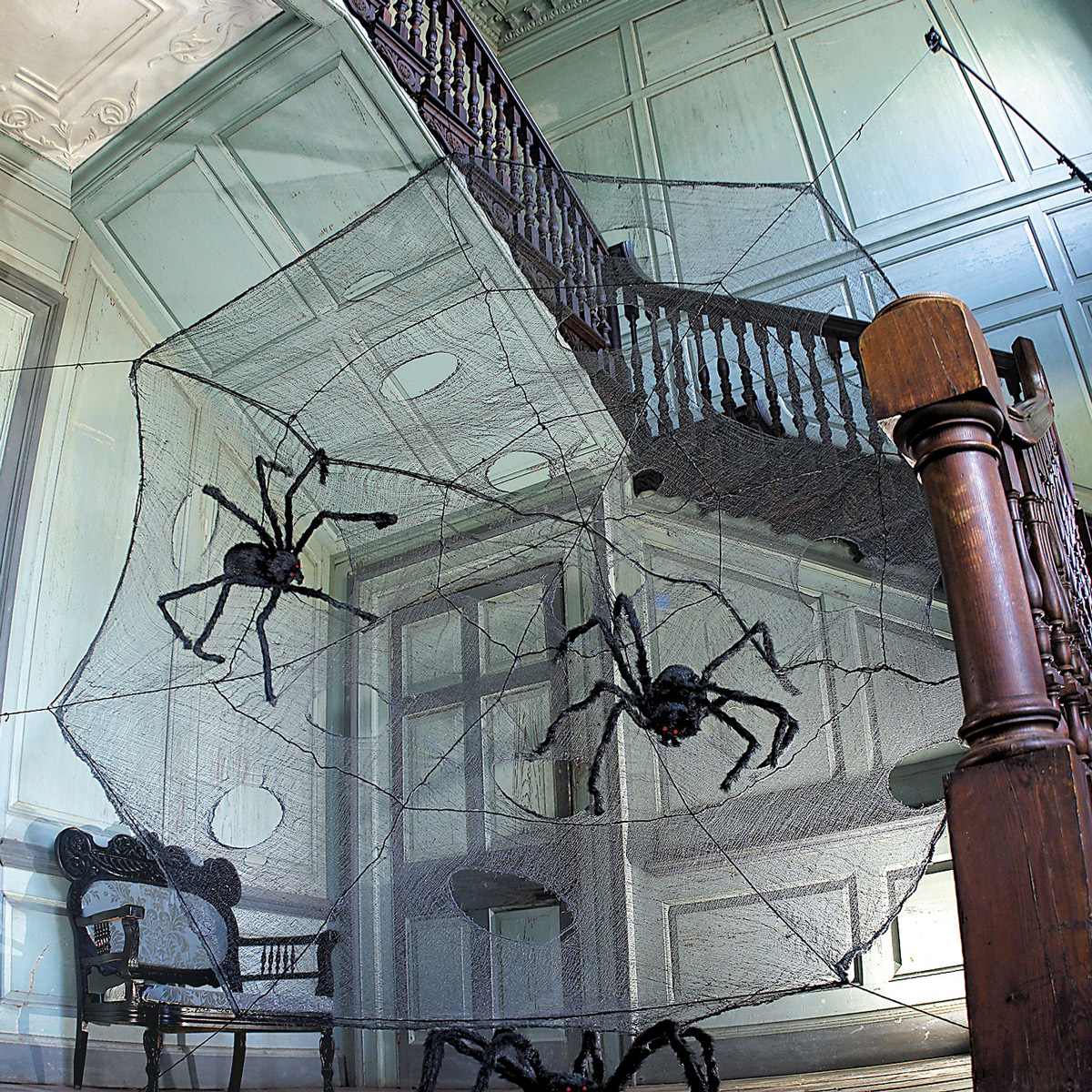
Spiders
Spiders are animals with a history going back many millions of years. They have always been with us, an ancient source of fear and fascination. They are abundant and widespread and are natural controllers of insect populations. Wherever you live, you’re always close to a spider.
Spiders are arachnids, not insects, but both spiders and insects belong to the largest group of animals on Earth, the arthropods - animals with hard external skeletons and jointed limbs.
Spiders have two main body parts, eight walking legs, simple eyes and piercing jaws and abdominal spinning organs. Some spiders are so small that we never see them, and others are bigger, some of them enormous.
Tarantulas are the movie stars of the spider world. They are cast in films when things hairy, scary and deadly are needed. But despite their appearance and reputation, bites from these spiders usually cause little harm, although not all hairy spiders are tarantulas.
In 1962, the first Spiderman comic strip was published in a magazine by Marvel Comics. It sold so well that Marvel created a magazine just for Spiderman.
Click on the following link and select your destination! View places in the world from a 360º angle.
You'll enjoy yourselves no end.


 people!
For those who will be doing the FCE this year or next, here are some places where you can access exercises to improve your FCE skills. Remember, PRACTICE makes the best instructor. You have plenty of time ahead, make a habit of doing some exercising every week, apart from your regular English classes. It'll pay off in the end! Just think of your pride and satisfaction when you receive that 'A' certificate, or even 'B' or 'C' ! It will come in useful for your university studies, believe me.
http://www.ompersonal.com.ar/firstcertificate/contenidotematico.htm
http://www.flo-joe.co.uk/fce/students/tests/tsindex.htm
http://firstcertificate.wordpress.com/category/practice-tests/
http://firstcertificate.wordpress.com/2007/11/25/sample-papers-download-print/
http://www.examenglish.com/index.php
http://www.testyourenglish.net/index.htm



1. First you consume chocolate, then chocolate consumes you!
2. If you take the T away from diet, it then spells DIE.
3. Do coffins have lifetime guarantees?
4. Wouldn't it be nice if the sticky stuff on envelopes tasted like chocolate?
5. Should vegetarians eat animal crackers?
6. Remember there is no I in TEAM; but there is a M and an E.
7.Save time... see it my way.
8.Reach for the moon. Even if you miss, you'll land among the stars.
9. Always remember you're unique, like everyone else.
10. Be nice to your kids. They'll choose your nursing home.


Have a wonderful day!
Hugs to all of you.
Miss Christine

Can you imagine seeing this? Or even living in it?


Remember: 3rd and 4th Seniors... Friday 20th
1st and 2nd Seniors....Friday 27th
Come to the links on my blog or look for your own.
Practice makes perfect!
For those who are in my Elective English group, currently engaged in making a ME scrapbook, here are some links on videos that teach you how to do activities and crafts related to the project. Select from the list or options offered. OR open You Tube and write 'scrapbook tutorials' in the search bar, and you'll find loads of material to help you or get ideas.
http://www.diynetwork.com/diy/pac_ctnt/text/0,,DIY_14161_24202,00.html
http://www.everything-about-scrapbooking.com/scrapbooking-videos.html
http://www.simplyscrapbooking.com/
http://my.scrapbooksetc.com/bettertv/
There are some very interesting ideas in these videos. Take some time to have a look at them.
What is an icon?
An icon is a pictorial representation, an image, a sign whose form suggests its meaning.
Examples of well-known icons:


 and so on...
http://www.icons.org.uk/theicons
Click on the above link to explore British icons and find out more about them.

http://www.london.gov.uk/london-life/sport-and-leisure/zoom/index.jsp
If you have a few minutes to spare, enjoy yourself with a virtual tour of famous London landmarks. Click on the link above, select from the list, and GO!
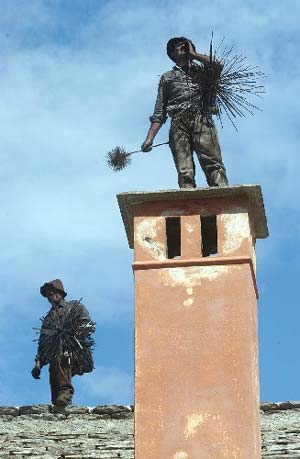
Dictation Nº 1 Chimney Sweeps
A chimney sweep is a person who cleans chimneys for a living. This job is considered to be one of the oldest in the world. In the last two hundred years, chimneys grew large enough to hold a man, so this profession developed enormously in the time of the Industrial Revolution.
In Victorian times, the business became notorious for employing young boys, as they were small enough to enter the chimneys and clean them from inside. The work was dirty and dangerous, and their employers were famous for abusing and exploiting them. Because of this, a special brush with a collapsible handle was invented, and it enabled the sweep to reach up the chimney without having to enter it.
The image of the chimney sweep has improved, and this can be seen in the film Mary Poppins. In some parts of the UK it is considered lucky for a bride to see one on her wedding day, so many modern British sweeps hire themselves out to attend weddings.
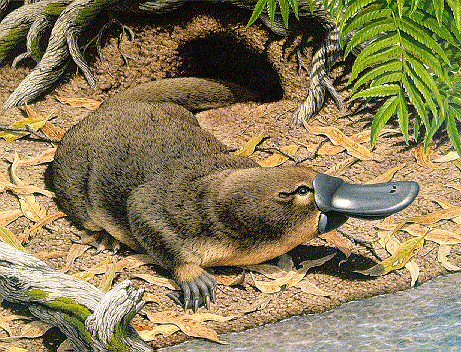
Dictation Nº_____ Platypuses
The platypus is a semi-aquatic animal endemic to eastern Australia, including Tasmania. Endemic means it is only found in there in its natural state. It is an egg-laying mammal which baffled European natural¡sts when it was first seen, and several of them considered it to be a fraud. It was thought that somebody had sewn a duck’s bill onto a beaver-like animal.
Platypuses are fascinating mammals, because of their bizarre appearance. It has a bill like a duck’s, a tail like a beaver’s, feet like an otter’s, and to cap it all, the male has a venomous spur on the hind foot that can cause severe pain to humans. It is an iconic symbol of Australia and is featured on the reverse of the Australian 20-cent coin. It is also the animal emblem of the state of New South Wales. ‘Syd’ was one of the three mascots chosen for the 2000 Sydney Olympic Games, together with an echidna and a kookaburra. Platypuses spend a great part of the day foraging for food, such as worms, shrimps and small fish.

Dictation Nº 3 Fairy Tales
Fairy tales are a type of literary genre which includes stories where princes and princesses meet witches and goblins. Mythical creatures grant wishes and cast spells. And in the end, everybody lives happily ever after!
Fairy tales have been found in every culture over many centuries. They were meant to be a way of teaching adults and children things to watch our for in the way the world works. The best known fairy tales of today originated from folk tales of 17th century France and 19th century Germany. Many tales were told and retold through generations, then edited and changed as they were written down. Fairy tales were actually written for adults, but are now enjoyed by people of all ages, and not all fairy tales feature fairies in them.
Fairy tales contain elements of magic, wonder and enchantment which contribute to their continuing popularity. Some examples of the most-loved fairy tales are Snow White and the Seven Dwarfs, Cinderella, The Sleeping Beauty, Rapunzel, The Emperor’s New Clothes, Hansel and Gretel, and many more.
Short stories are wonderful ways of learning more of a language, without stressing you with the need to get through a whole novel.
Here are some links that you can use to find interesting material.
http://www.americanliterature.com/ss/ssindx.html
http://www.indianchild.com/short_stories.htm
http://www.bibliomania.com/0/5/frameset.html