

VERB TESTS COMING SOON
     |
LINKS TO VERB EXERCISES
Select your exercises! There are lots to choose from.
Do as many as possible from now until August 7th and 8th.
To Be (present and past)
http://www.agendaweb.org/verbs/tobe.html
Be-Can-Do-Have
http://www.agendaweb.org/verbs/be_can_do_have.html
Simple Present
http://www.agendaweb.org/verbs/present_simple.html
Simple Past
http://www.agendaweb.org/verbs/past_simple.html
http://www.agendaweb.org/verbs/simple_past.html
Present Continuous
http://www.agendaweb.org/verbs/present_continuous.html
http://www.agendaweb.org/verbs/present_progressive.html
Past Continuous
http://www.agendaweb.org/verbs/past_progressive.html
Present Perfect
http://www.agendaweb.org/verbs/present_perfect.html
Future Tenses
http://www.agendaweb.org/verbs/future.html
Past Perfect
http://www.agendaweb.org/verbs/past_perfect.html
Conditionals
http://www.agendaweb.org/verbs/conditional.html
Passive Voice
http://www.agendaweb.org/verbs/passive.html
Quizzes
http://grammar.ccc.commnet.edu/GRAMMAR/cgi-shl/par2_quiz.pl/irregular_quiz.htm
ABSCH DEBATE 2008
Last Friday, June 20th, three pupils from St. Paul’s, accompanied by their teacher, Miss Christine Evans, went to Santiago to participate in the annual ABSCH Debating Event, which took place at Santiago College. The competitors were Carla Canessa, Mailén Parodi and Daniel Ramirez. We received a warm welcome from the Santiago College organizers, and lots of lovely food. We had got up very early that day, so we really enjoyed the tasty breakfast they had prepared for us. During the morning Daniel participated as Second Speaker in the first debate. After lunc, which was very nice too, Carla and Mailen were on opposing teams in the last debate. They met friends, made new ones, and all in all, I think had a very interesting and eventful day. Congratulations to the three of them on their performance and commitment to representing the school.
If you follow this Flickr link, you’ll have access to the photos
http://www.flickr.com/photos/englishworld/sets/72157605969768144/
DICTATIONS SECOND SENIORS (14,15)
Sharks

Sharks
Just the mention of the word ’shark’ still strikes fear into the heart of most people. The word evokes images of huge maneaters, like the great white shark in the film ’Jaws’, that attack swimmers and divers, tear them to pieces or even swallow them whole. Such brutal attacks do occur, but very rarely, because sharks attack humans for very specific reasons, which are three. Sharks are territorial creatures, and when we swim in their territory, we are invading it. Divers are especially vulnerable to these attacks. Also, because of our size and shape we are appropriate food size for them, and possibly they mistake us for seals and sea lions. Some researchers say that surfers are also very vulnerable when they are lying on the surfboard. Finally, another common reason is the immaturity of young sharks, who act in the same way as a human child, enjoying anything that can be bitten or nibbled, often with horrible results.
Crocodiles

Crocodiles inspire fear, which may have something to do with their dominating presence. After all, for nearly 100 million years during the Mesozoic era (248-65 million years ago), the crocodilian order ruled the Earth. Today’s crocodiles have changed remarkably little since then. They are still the most advanced reptile species, and they still terrify most people.
Crocodiles, colloquially called crocs, are large aquatic reptiles that live throughout tropical areas in Africa, Asia, the Americas and Australia. They tend to gather in slow-moving rivers and feed on a wide variety of living and dead mammals and fish. The larger types of crocodiles can be very dangerous to humans, some of them killing hundreds of people each year.
Crocs are very fast over short distances, even out of water. Their jaws are powerful and their teeth are sharp for tearing flesh, but cannot open their mouth if it is held closed. They have limited movement in their neck, so you can protect yourself from an attack by getting even a small tree between yourself and the croc!
SECOND SENIORS DICTATION Nº 13
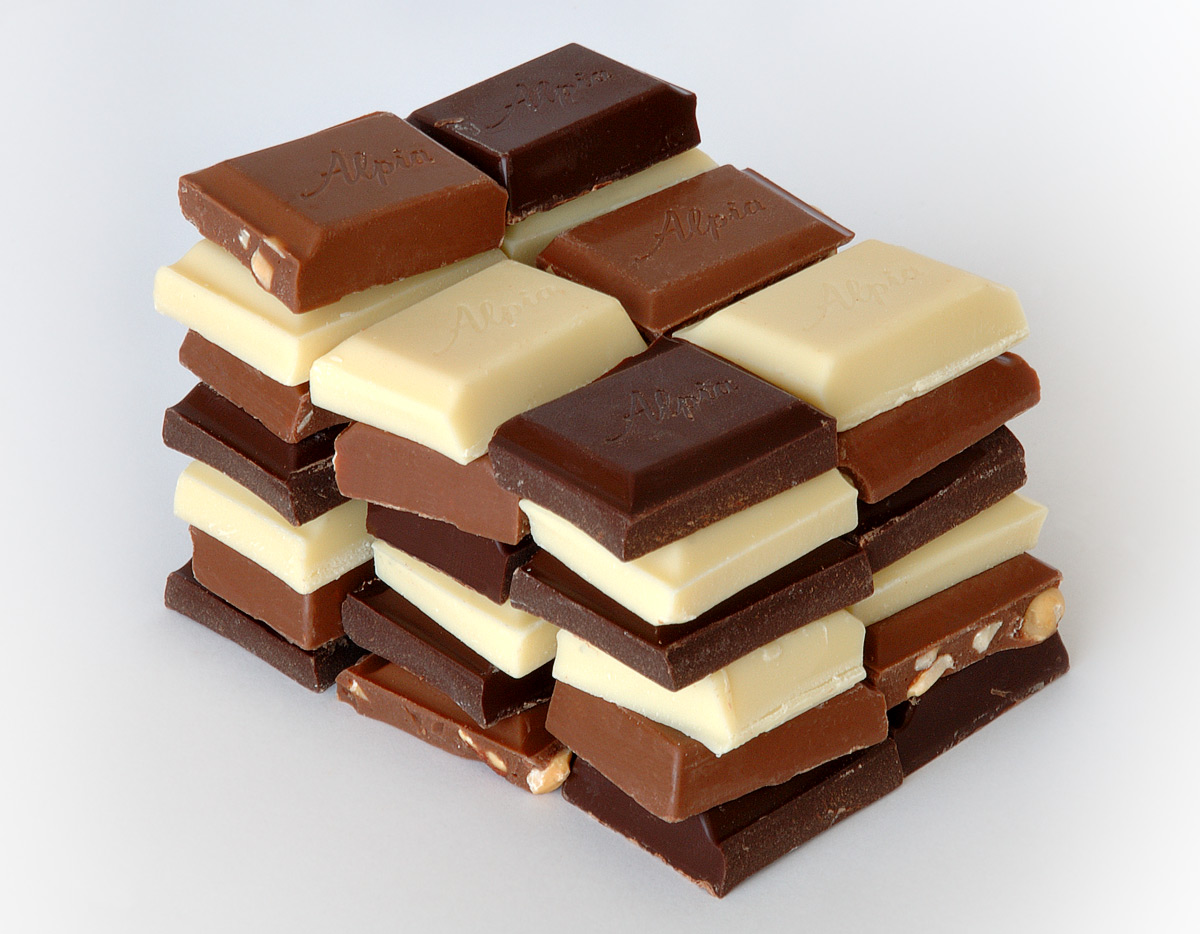
Chocolate
Chocolate! There are few foods that people feel as passionate about.For the true chocoholic, just thinking about chocolate can evoke a pleasurable response.
Chocolate began in the time of the Mayas, who used to drink it bitter, adding local ingredients, such as pepper, wine, vanilla, and chili peppers. It was taken to Europe for the first time in 1585 by Hernán Cortés during the conquest of Mexico. There, the chili peppers were replaced by sugar, and in the beginning was a luxury food few people were able to afford.
Although it was only drunk at first, later people began to experiment with different ways of preparing it. In 1828 a Dutchman produced a chocolate powder and in 1849, Joseph Fry, an English chocolate maker, was able to create the first eating chocolate. Later, Henri Nestlé, a Swiss chemist, used powdered milk in his mixture, which gave as a result the first milk chocolate.
THE HISTORY OF HOT AIR BALLOONING
On the 19th September 1783 Pilatre De Rozier, a scientist, launched the first hot air balloon called ’Aerostat Reveillon’. The passengers were a sheep, a duck and a rooster and the balloon stayed in the air for a grand total of 15 minutes before crashing back to the ground.
The first manned attempt came about 2 months later on 21st November, with a balloon made by 2 French brothers, Joseph and Etienne Montgolfier. The balloon was launched from the centre of Paris and flew for a period of 20 minutes. The birth of hot air ballooning!!!
Just 2 years later in 1785 a French balloonist, Jean Pierre Blanchard, and his American co pilot, John Jefferies, became the first to fly across the English Channel. In these early days of ballooning, the English Channel was considered the first step to long distance ballooning so this was a large benchmark in ballooning history.
Unfortunately, this same year Pilatre de Rozier (the world’s first balloonist) was killed in his attempt at crossing the channel. His balloon exploded half an hour after takeoff due to the experimental design of using a hydrogen balloon and hot air balloon tied together.
The next major pivotal point in balloon history was on January 7th 1793. Jean Pierre Blanchard became the first to fly a hot air balloon in North America. George Washington was present to see the balloon launch.
Now a large jump in time, of over 100 years: In August of 1932 Swiss scientist Auguste Piccard was the first to achieve a manned flight to the Stratosphere. He reached a height of 52,498 feet, setting the new altitude record. Over the next couple of years, altitude records continued to be set and broken every couple of months - the race was on to see who get reach the highest point.
In 1935 a new altitude record was set and it remained at this level for the next 20 years. The balloon Explorer 2, a gas helium model reached an altitude of 72,395 feet (13.7 miles)! For the first time in history, it was proven that humans could survive in a pressurized chamber at extremely high altitudes. This flight set a milestone for aviation and helped pave the way for future space travel.
The Altitude record was set again in 1960 when Captain Joe Kittinger parachute jumped from a balloon that was at a height of 102,000 feet. The balloon broke the altitude record and Captain Kittinger, the high altitude parachute jump record. He broke the sound barrier with his body!
If you want to learn more about how hot air balloons work, visit the following site. http://www.howstuffworks.com/hot-air-balloon.htm
ADJECTIVES AND ADVERBS IN COMMERCIALS
GAMES TO KEEP YOU BUSY DURING HOLIDAYS
This link will take you to a vast selection of games of all types. Try them out. You’ll also be practicising your English skills by reading and followign the instructions.
Happy Holidays!
http://www.woodlands-junior.kent.sch.uk/Games/Index.html
TRAVEL DOWN THE THAMES WITH WINNIE THE POOH
Have a look at this link http://www.woodlands-junior.kent.sch.uk/riverthames/index.htm.
You will be ablo to trace a journey in company of Winnie the Pooh of the Thames River from its origin to the sea. On the way you have the opportunity of learning more about Great Britain and some history in addition!
Curious British Customs
Great Britain is the birthplace of Newton, Darwin, Shakespeare and The Beatles: home of the world’s largest foreign exchange market, the world’s riches football club – Manchester United, the inventor of the hovercraft and J.K. Rowling, the author of the Harry Potter series . It is also a country full of customs and traditions, some interesting and some strange. But they’re all interesting and a part of the British way of life.
One of these is the annual Cheese Rolling competition, which takes place in spring, in several parts of the country. A round cheese is rolled down a hill chased by competitors. The first person to catch it is the winner.
Another curious festival is one by the name of Up-Helly-Aa, which is thought to be Britain’s largest fire and torchlight festival. Its origins are in the Viking invasion of Scotland and it takes place in the Shetland islands. The Shetlanders make a model of a Viking ship, and drag it through the town to the sea. They then throw burning torches onto the ship and create a massive bonfire, all the while singing Up-Helly-Aa songs.

Wonderful Chile
Stretching down half the length of South America’s western coast, Chile’s skinny shoelace form is a wonderland of geographical and climatic diversity. The country offers countless natural attractions, from arid desert expanses to volcanoes, lakes, rivers, waterfalls, beaches and mountains, all waiting to be explored.
Although Chile has many urban centres, the country’s most compelling feature is its incredible natural environment and the leisure and adventure opportunities that it presents. Visitors are drawn to the country by the superb coastline, made up of almost 4,800 km of sandy beaches, sheltered caves and hidden inlets, and the snow-capped peaks of the Andes, with their fabulous skiing areas. Additionally, there is the mysticism of the Atacama Desert, the remote allure of Patagonia and the scenic splendour of the country’s volcanic regions. And if this weren’t enough, Chile also offers visitors mysterious Easter Island and the frozen beauty of Antarctica.
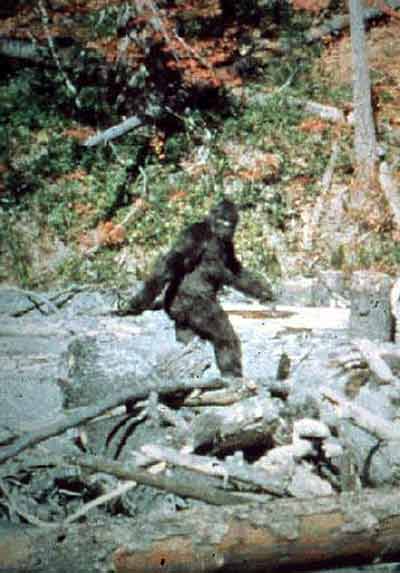
Bigfoot
Is it possible that a reclusive, man-like creature inhabits the remote areas of our planet? We cannot assume that we know about all the species on our planet. Only a few years ago, several new creatures were discovered: the okapi and the coelacanth. So is it so hard to believe that a hair-covered, man-like creature could exist, on the verge of discovery?
In remote areas there have been sightings of just such a creature. Known by many names, such as Bigfoot, Susquatch, Yeti, Almas, and more, the descriptions of the creature are very similar from one place to another. This creature has been seen in North America, Europe, Africa and Asia. Most of the people who say they have seen it coincide in the general details, although there are differences in the reports of its height, which varies from 5’5’’ to 8’+. This could be explained if the age were taken into account. Did they see an adult or a juvenile?
HAPPY HOLIDAYS TO EVERYONE
SHEL SILVERSTEIN - Sarah Cynthia Sylvia Stout
Read this story about a girl callled Sarah Cynthia Sylvia Stout, by Shel Silverstein, a well-known author of lovely stories for children and adults.
SARAH CYNTHIA SYLVIA STOUT
WOULD NOT TAKE THE GARBAGE OUT
Sarah Cynthia Sylvia Stout
Would not take the garbage out!
She’d scour the pots and scrape the pans,
Candy the yams and spice the hams,
And though her daddy would scream and shout,
She simply would not take the garbage out.
And so it piled up to the ceilings:
Coffee grounds, potato peelings,
Brown bananas, rotten peas,
Chunks of sour cottage cheese.
It filled the can, it covered the floor,
It cracked the window and blocked the door
With bacon rinds and chicken bones,
Drippy ends of ice cream cones,
Prune pits, peach pits, orange peel,
Gloppy glumps of cold oatmeal,
Pizza crusts and withered greens,
Soggy beans and tangerines,
Crusts of black burned buttered toast,
Gristly bits of beefy roasts. . .
The garbage rolled on down the hall,
It raised the roof, it broke the wall. . .
Greasy napkins, cookie crumbs,
Globs of gooey bubble gum,
Cellophane from green baloney,
Rubbery blubbery macaroni,
Peanut butter, caked and dry,
Curdled milk and crusts of pie,
Moldy melons, dried-up mustard,
Eggshells mixed with lemon custard,
Cold french fried and rancid meat,
Yellow lumps of Cream of Wheat.
At last the garbage reached so high
That it finally touched the sky.
And all the neighbors moved away,
And none of her friends would come to play.
And finally Sarah Cynthia Stout said,
"OK, I’ll take the garbage out!"
But then, of course, it was too late. . .
The garbage reached across the state,
From New York to the Golden Gate.
And there, in the garbage she did hate,
Poor Sarah met an awful fate,
That I cannot now relate
Because the hour is much too late.
But children, remember Sarah Stout
And always take the garbage out!
Shel Silverstein, 1974
MORE COMPARATIVES
http://engli.webpark.pl/comparatives.html
http://www.learnenglishfeelgood.com/sp/adjectiveadverb6.html
http://www.learnenglishfeelgood.com/sp/adjectivescomp3.html
http://www.learnenglishfeelgood.com/sp/new_adjectivescomp3.html
ARTICLES (EXERCISES)
Articles(a/an/the)
Easy
http://esl-efl.webpark.pl/english_articles.html
http://www.learnenglishfeelgood.com/lefg2_articles1.html
http://www.learnenglishfeelgood.com/lefg2_articles2.html
http://www.learnenglishfeelgood.com/sp/articles6.html
http://www.learnenglishfeelgood.com/sp/
http://www.learnenglishfeelgood.com/sp/new_articles1.html
http://www.learnenglishfeelgood.com/sp/articles7.html
More difficult
http://engli.webpark.pl/articles.html
COMPARATIVES AND SUPERLATIVES
FUTURE TENSE WITH WILL
DICTATIONS SECOND SENIORS (7,8,9)

The Tragedy of the Dodo
In the year 1598, Portuguese sailors landing on the shores of the island of Mauritius discovered a previously unknown species of bird, the Dodo. As it had been isolated by its island location from contact with humanity, the dodo greeted the visitors with child-like innocence. The sailors mistook the gentle spirit of the dodo, and its lack of fear of the new predators, as stupidity. They called the bird “dodo”, which means something like “simpleton” in the Portuguese language. It was unable to fly, and fed on plants and fruit. Once a year it laid an egg in a nest on the ground.
Later, Dutch expeditions were the cause of the bird becoming extinct. The dodos were not very tasty, but the sailors who landed on the coast after long voyages were hungry, so they ate the adult birds, which were too big to hide and too fat to run; the animals they brought with them on their ships ate the young birds and the eggs. By 1681, the last dodo on Mauritius had been eaten.
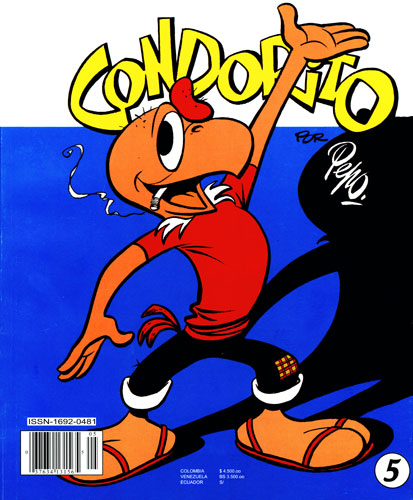
Condorito
Condorito is a famous Chilean cartoon character, a personification of a funny condor living in a fictitious town named Pelotillehue, a setting typical of many small Chilean provincial towns. Contrary to popular belief, he is meant to be a representation of the Chilean people exclusively.
Condorito was created by the Chilean cartoonist René Ríos, known as ‘Pepo’. In spite of his Chilean origin, Condorito is very popular in several Latin American countries, in which the character is considered part of the general popular culture. Condorito and his friends are also featured monthly in a magazine that carries his name.
One peculiar characteristic of this cartoon is that, at the end of almost every strip, the character that goes through an embarassing moment always falls backwards to the floor, accompanied by the PLOP! sound effect. Sometimes this effect is replaced by the victim saying, ‘ I demand an explanation!’

Spanglish
During the nineteenth and early twentieth centuries, millions of Europeans and Latin Americans went to live in the USA. Within a couple of generations, most of the French, German, Italian and Russian immigrants spoke only English, but many of the Spanish speakers became bilingual.
Today there are about thirty million Hispanics in the USA who speak Spanish and English. Often the Spanish they speak is Spanglish, which is Spanish, but contains many words of English origin. Some examples of
CyberSpanish are maus and chatear. Other words refer to everyday activities, and show a sense of humour: when Spanish speakers want to buy groceries, they ‘compran groserías’, and when they vacuum the carpet, they ‘vacunan la carpeta’.
Spanglish is not only found on the Internet, but it is also spoken on TV, sung to the rhythm of rap and salsa, and even used by a number of famous Puerto Rican poets.
TEST TIME !
The first unit tests are coming up...and you won't even realise when it's time for the final tests and exams. Make a firm proposal to study with time, and not at the last minute. Last-minute studying is not effective, neither is it healthy. Remember that school is paradise compared to what is expected from you after you leave, either at university or wherever else you choose to study. Pay attention in class, don't waste your(and the teacher's) precious time and take advantage of all the opportunities offered to you.

GERUNDS AND INFINITIVES
Self-study practice: Unit 6 COUNTDOWN TO FIRST CERTIFICATE
Links to Gerunds and Infinitives: interactive exercises
Do as many as you can. The more, the better!
1.
http://www.ompersonal.com.ar/omexercise/gerundioeinfinitivo/unit27.htm
2.
http://www.angelfire.com/wi3/englishcorner/grammar/Interactive/gerinfq1.html
3.
http://www.angelfire.com/wi3/englishcorner/grammar/Interactive/gerinfq2.html
4.
http://esl.about.com/library/quiz/bl_verbform1.htm
5.
http://esl.about.com/library/quiz/bl_verbform2.htm
6.
http://a4esl.org/q/f/z/zz97mkm.htm
7.
http://a4esl.org/q/h/9801/el-to-ing.html
8.
http://ww2.college-em.qc.ca/prof/epritchard/infgeru2.htm
9.
http://ww2.college-em.qc.ca/prof/epritchard/infgerun.htm
10.
http://www.eflnet.com/grammar/gerinf1.php
11.
http://www.englisch-hilfen.de/en/exercises/structures/gerund_infinitive_verbs.htm
12.
http://www.eslus.com/LESSONS/GRAMMAR/GERUNINF/Gramb.htm
13.
http://engli.webpark.pl/gerund_or_infinitive.html
14.
http://web2.uvcs.uvic.ca/elc/studyzone/410/grammar/gerinf2.htm
15.
http://web2.uvcs.uvic.ca/elc/studyzone/410/grammar/gerinf1.htm
16.
http://www.englishpage.com/gerunds/gerunds_infinitives_30.htm
17.
http://www.englishpage.com/gerunds/gerunds_infinitives_11.htm