Blogia

EnglishWorld

TRACY CHAPMAN Mountains O'Things

Mountains O’Things

The life I’ve always wanted
I guess I’ll never have
I’ll be working for somebody else
Until I’m in my grave
I’ll be dreaming of a live of ease
And mountains
Oh mountains o’ things


To have a big expensive car
Drag my furs on the ground
And have a maid that I can tell
To bring me anything
Everyone will look at me with envy and with greed
I’ll revel in their attention
And mountains
Oh mountains o’ things


Sweet lazy life
Champagne and caviar
I hope you’ll come and find me
Cause you know who we are
Those who deserve the best in life
And know what money’s worth
And those whose sole misfortune
Was having mountains o’ nothing at birth


Oh they tell me
There’s still time to save my soul
They tell me
Renounce all
Renounce all those material things you gained by
Exploiting other human beings


Consume more than you need
This is the dream
Make you pauper
Or make you queen
I won’t die lonely
I’ll have it all prearranged
A grave that’s deep and wide enough
For me and all my mountains o’ things


Mostly I feel lonely
Good good people are
Good people are only
My stepping stones
It’s gonna take all my mountains o’ things
To surround me
Keep all my enemies away
Keep my sadness and loneliness at bay

The life I’ve always wanted
I guess I’ll never have
I’ll be working for somebody else
Until I’m in my grave
I’ll be dreaming of a live of ease
And mountains
Oh mountains o’ things

I’ll be dreaming, dreaming...
Dreaming...


WARNING by Jenny Joseph


Warning
 
 
 When I am an old woman I shall wear purple
With a red hat which doesn't go, and doesn't suit me.
And I shall spend my pension on brandy and summer gloves
And satin sandals, and say we've no money for butter.
I shall sit down on the pavement when I'm tired
And gobble up samples in shops and press alarm bells
And run my stick along the public railings
And make up for the sobriety of my youth.
I shall go out in my slippers in the rain
And pick flowers in other people's gardens
And learn to spit.

You can wear terrible shirts and grow more fat
And eat three pounds of sausages at a go
Or only bread and pickle for a week
And hoard pens and pencils and beermats and things in boxes.

But now we must have clothes that keep us dry
And pay our rent and not swear in the street
And set a good example for the children.
We must have friends to dinner and read the papers.

But maybe I ought to practice a little now?
So people who know me are not too shocked and surprised
When suddenly I am old, and start to wear purple.

LINKS TO THIRD SENIORS TEST PRACTICE

Future Tenses

http://www.quia.com/rd/78574.html?AP_rand=1002748128

http://www.nationalgeographic.com/ngkids/9901/beyond-2000/beyond-2000-icons.html

http://www.englishgrammarsecrets.com/goingtoorwill/menu.php

http://web2.uvcs.uvic.ca/elc/studyzone/330/grammar/4fut.htm

http://www.quia.com/hm/327075.html

http://www.bored.com/photos/willbeshot_3.html

http://jat.uky.edu/courses/tel322/gallery/04s/interactive/long/index.html

http://www.quia.com/rr/262270.html

http://www.visualesl.com/pages/en/tests/133/future_continuous

http://www.bbc.co.uk/apps/ifl/worldservice/quiznet/quizengine?ContentType=text/html;quiz=1158_future_hopes

 http://www.bbc.co.uk/apps/ifl/worldservice/quiznet/quizengine?ContentType=text/html;quiz=1621_futures

http://www.storyplace.org/preschool/activities/wheelsonstory.asp ho,ho,ho!

http://home.nordnet.fr/%7Ermaufroid/pupitre/pastpresentfuture/goingto.htm


LINKS TO FOURTH SENIORS TEST PRACTICE

Present Perfect (cartoon and explanations)

http://www.englishtenseswithcartoons.com/verb/PresentPerfect.htm

Present Perfect Continuous (cartoon and explanations)

http://www.englishtenseswithcartoons.com/verb/PresentPerfectCont.htm


Exercises

http://www.saywhatesl.com/quizes/presentperfect_mx.htm

http://web2.uvcs.uvic.ca/elc/studyzone/330/grammar/prperf1.htm

http://www.englishtenseswithcartoons.com/pages/exercises/PresentPerfect1.php

http://www.englishtenseswithcartoons.com/pages/exercises/PresentPerfectContinuous1.php

http://www.englishtenseswithcartoons.com/page/exercise/present_perfect_simple_or_continuous

http://www.englishtenseswithcartoons.com/pages/exercises/PresentPerfectNeg1.php

http://www.englishtenseswithcartoons.com/pages/exercises/PresentPerfect3.php

http://www.englishtenseswithcartoons.com/page/test/present_perfect_continuous_exercise

http://www.ompersonal.com.ar/omexercise/tiemposverbales/unit13.htm

http://perso.wanadoo.es/autoenglish/gr.percon.i.htm


COUNT THE BLACK DOTS IN THE PICTURE


GOOD LANGUAGE JOKES

A nursery school teacher was observing her classroom of children while they were drawing. She would occasionally walk around to see each child's work.

As she got to little Sarah who was working diligently, she asked what the drawing was. Sarah replied, 'I'm drawing God.' The teacher paused and said, 'But no one knows what God looks like.'

Sarah replied, 'They will in a minute'

Three retirees, each with a hearing loss, were playing golf one fine March day. One remarked to the other, 'Windy, isn't it?' No, 'the second man replied, 'it's Thursday.' The third man chimed in, 'So am I. Let's have a beer.'

Where's the English Channel? I don't know - our television doesn't pick it up.

A policeman spotted a jay walker and decided to challenge him, 'Why are you trying to cross here when there's a zebra crossing only 20 metres away?'  

'Well,' replied the jay walker, 'I hope it's having better luck than me.'

FUNNY THINGS

Can you find a face in this picture?

Take this personality test.

http://www.naute.com/stories/test.phtml


FCE LISTENING ONLINE

For those who will embark on FCE this year, some sites to do listening online:

http://www.britishcouncil.org/professionals-exams-fce-listening-1.htm

http://www.examenglish.com/FCE/fcelistening.htm

The site instructions are in Czech not in English, but it is easy to follow:


http://www.helpforenglish.cz/Certifikaty/FCE/c2006081604--
E-FCE--Listening--part-1.html

http://www.helpforenglish.cz/Certifikaty/FCE/c2006103001--
E-FCE--Listening--part-2.html

http://www.helpforenglish.cz/Certifikaty/FCE/c2006110101--
E-FCE--Listening--part-3.html

I hope these are useful!


CRAZY DEFINITIONS

What are armies?

The things you have up your sleevies.

What is aromatic?

An early machine for making arrows.

What is a beetroot?

A potato with very high blood pressure.

What is a cloak?

A croak made by a Chinese frog.

What is a coward?

A man who thinks with his legs.

What is a deadline?

A fence round a graveyard.

What is extinct?

A dead skunk.

What is a pacifist?

Someone who punches you on the nose peacefully.


FIRST CERTIFICATE ENGLISH PRACTICE

Try some of the following links to practise your FCE skills. Only regular practice can assure you a reasonable degree of success. Only, and I’m sorry to keep harping on it, only constant work and practice can help you prepare for that moment of truth, when you’re sitting in the examination room alone with yourself and what you have learned (and practised) all this time. Don’t wait until the last moment! Do as much as you can NOW!  I hope you won’t have to feel regret at that moment for the opportunities and time lost on the way.

http://www.ompersonal.com.ar/firstcertificate/contenidotematico.htm

http://www.portalweblog.com/fce/index.php?blog=5&cat=24

http://www.parapal-online.co.uk/cambridge.html

http://www.flo-joe.co.uk/fce/students/strategy/p3pt3a.htm

http://www.selfaccess.com/

http://www.learn4good.com/languages/evr_english_grammar.htm

http://www.imparareinglese.co.uk/esercizi_inglese/FCE_key_word_transformation_3.html

http://esl.about.com/cs/britishcambridge/a/a_fce_2.htm


USEFUL LINKS TO ELECTIVE ENGLISH PROJECT

All these links may help the Fourth Seniors Elective English students to find material for their ongoing project for the Viña del Mar Tourist booklet.

http://en.wikipedia.org/wiki/Vi%C3%B1a_del_Mar

http://www.chile-travel.com/vinamar.htm

http://www.vinayvalpo.com/vinadelmar/about.html

http://www.geographia.com/chile/vinadelmar.htm

http://www.world66.com/southamerica/chile/vinadelmar

http://vina.exciteworks.com/


VALPARAISO, AN UNUSUAL CITY


Click on the following link and you'll access a very good site with information about all sorts of topics related to Valparaiso. You can view it in Spanish or in English. Look for the language option on the right.

http://www.ciudaddevalparaiso.cl/inicio/index.php


MORE VERB TEST LINKS

http://www.eflnet.com/grammar/verbtense_index.php (very good, select your needs and your level)

http://www.roadtogrammar.com/

http://www.englishpage.com/verbpage/verbtenseintro.html

http://a4esl.org/a/g3.html

http://a4esl.org/a/g5.html

http://www.manythings.org/e/grammar.html

http://www.ac-nancy-metz.fr/enseign/anglais/Henry/gram.htm

Go for it!


OLYMPIC GAMES 2008

         The Olympic Games are the greatest sporting event in the world. No matter how many championship titles an athlete collects, to win at the Olympics is often considered to be the ultimate athletic achievement. In the intense pursuit of sporting excellence, stories of true sportsmanship shine. The Olympic motto, ’Citius, Altius, Fortius’, meaning ’Swifter, Higher, Stronger’ best represents the Olympic ideal of excellence, and the OIympic Creed is what these games really mean.

’The most important thing in the Olympic Games is not to win but to take part, just as the most important thing in life is not the triumph but the struggle. The essential thing is not to have conquered but to have fought well’.

In these days, this creed acquires even more relevance, because in an increasingly demanding level of excellence, it is hard to resist the temptation of doing things without ’outside help’. It is even harder to do what you have to do based on your own merits.


     The 2008 Olympics  are about to begin! Only two days to the inaugural ceremony in Beijing, China. The slogan for the 2008 Olympics is  ’One World One Dream’, and this expresses the wish people all over the world have in common, inspired by the Olympic ideals, to try their best for the bright future of mankind. In spite of differences in colour, race and language, athletes from everywhere on our planet join to compete in a healthy way and share life experiences.


     The link below is the official site of the 2008 Olympics, and here you will be able to find out exactly what is happening every day, have access to online photos, keep up with the latest results, etc.  Remember we have an ex-St. Paul’s pupil competing in the shooting competition. Jorge Atalah has practised this sport for years, and takes the spirit of St. Paul’s School with him to Beijing. He already competed in the 2004 Olympics in Athens. Good luck to  ’Toto’ !

http://en.beijing2008.cn/


Curious Food

Balut

Beondegi


Ketchup


Extreme Sports

Parkour


REMEMBER TO STUDY FOR THE VERB TESTS

 LINKS TO VERB EXERCISES

Select your exercises! There are lots to choose from.

Do as many as possible from now until August 7th and 8th.


To Be (present and past)

http://www.agendaweb.org/verbs/tobe.html


Be-Can-Do-Have

http://www.agendaweb.org/verbs/be_can_do_have.html


Simple Present

http://www.agendaweb.org/verbs/present_simple.html


Simple Past

http://www.agendaweb.org/verbs/past_simple.html

http://www.agendaweb.org/verbs/simple_past.html


Present Continuous

http://www.agendaweb.org/verbs/present_continuous.html

http://www.agendaweb.org/verbs/present_progressive.html


Past Continuous

http://www.agendaweb.org/verbs/past_progressive.html


Present Perfect

http://www.agendaweb.org/verbs/present_perfect.html


Future Tenses

http://www.agendaweb.org/verbs/future.html


Past Perfect

http://www.agendaweb.org/verbs/past_perfect.html


Conditionals

http://www.agendaweb.org/verbs/conditional.html


Passive Voice

http://www.agendaweb.org/verbs/passive.html


Quizzes

http://grammar.ccc.commnet.edu/GRAMMAR/cgi-shl/par2_quiz.pl/irregular_quiz.htm

DICTATIONS SECOND SENIORS (16,17,18)

Curious Food

Not everybody eats the same things in different parts of the world. What we eat may seem strange, unusual, or uninteresting to others and vice-versa. Some of the curious foods that others consider a delicacy are these.

Bird’s nest soup, eaten by the Chinese for hundreds of years, are the nests of cliff swallows, which are collected by climbers on precariously tall ladders, who then clean them carefully and dissolve them into soup. They are rare and very expensive.

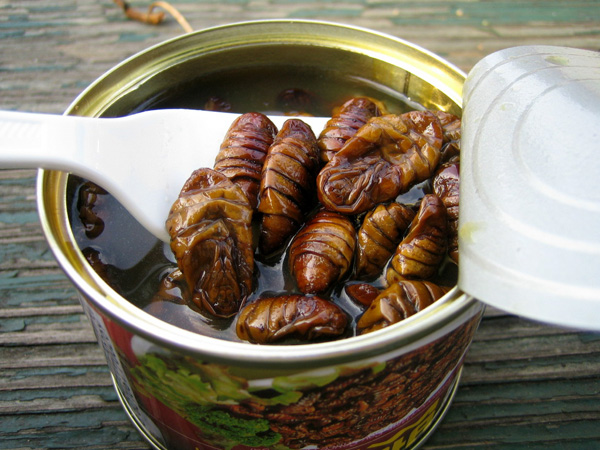
Beondegi, or silkworm pupae, are a popular Korean street snack, and are served fresh or from tins. They could be said to replace Western crisps, as they have a crunchy consistency.


A favourite Filipino snack is balut, a three-week-old fertilized duck egg, eaten straight out of the shell, complete with partially formed feathers, feet, eyeballs and blood vessels.


Fugu, eaten in Japan, is a puffer fish. Only specially qualified chefs are allowed to prepare this dish, because it contains deadly toxins that must be eliminated. At least 300 people die each year after eating it. The Japanese emperor isn’t allowed to eat it, lest it be his last meal.


Ketchup


Ketchup! Hamburgers seem naked without it. Nearly every American household has a bottle of it in the fridge. How did ketchup attain this status as America’s most popular condiment?


The roots of ketchup are linked to pickles. Hundreds of years ago, the Chinese and Malaysians used the brine from pickled fish as dipping sauce. Known as kachiap, the sauce had a savoury taste, flavoured by the brine spices and fish. In the 1600s, after traders brought the idea to Britain, the affluent classes there commonly served dishes with the rich brine from pickled walnuts and mushrooms. Eventually, the Brits began bottling these succulent condiments, calling them catsup.


Colonial Americans borrowed and experimented with the British catsup recipes, trying different vegetables and spices. At first, they were tart, not sweet, but later, around the mid-nineteenth century, entrepreneurs exploited the American taste for sweet foods and sold catsup made with tomatoes, vinegar, sugar, cinnamon, cayenne pepper and salt. The growing popularity and availability of tomato catsup took off in the 1870s, when the young Heinz company marketed it as ‘ketchup’ in their product line of condiments.


Extreme Sports


Extreme sports are known for their ability to introduce an adrenaline rush in participants, although it is not due to fear, as some people may think, but it is produced by increased levels of dopamine, endorphins and serotonin because of the high level of physical exertion. They tend to be individual rather than team sports and a probable result because of mismanagement or mistakes is death.


One sport classified as extreme is wingsuit flying, the art of flying the human body through the air using a special jumpsuit, which shapes the human body so as to create lift. It is also called a birdman suit or squirrel suit.


Another extreme sport is Parkour, also known as PK. It is a physical discipline of French origin, in which participants attempt to pass obstacles in the fastest and most direct manner possible, using skills such as jumping, vaulting and climbing, or the more specific parkour moves. The obstacles can be anything in one’s environment, so it is often practised in urban areas because of many suitable public structures, such as buildings, rails and walls.


 

DO YOU SPEAK ENGLISH?

This is MEAN! And unhelpful, too.


I WOULD LIKE TO BUY A HAMBURGER

 As you can see, pronunciation is important!


WHAT IS NECESSARY TO LEARN ENGLISH WELL?

Learning English requires action. You may know all the learning tips, but if you don’t start doing things, you will achieve nothing. The fact is, if you want to learn to speak English well, you must change your life. Here are some examples of things you will have to do:


  • read a book, article or other  in English for half an hour if possible every day, analyzing the grammar in sentences and looking up words in an English dictionary.
  • listen to an audiobook or other recording in English, stopping it frequently, trying to understand what is being said, and trying to imitate the speaker’s pronunciation.
  • spend your afternoon practicing the pronunciation of the English "r" sound in different words.
  • carefully write an e-mail message in English, using a dictionary or a Web search every 20 seconds to make sure every word is correct, and taking 5 minutes to write one sentence.
  • think about an English sentence you’ve read, wondering if it could say "a" instead of "the" in the sentence, and trying to find similar sentences on the Web to find out the answer.
  • walk down the street and build simple English sentences in your head (talking to yourself in English about the things you see around you)
  • Answer in English when you’re spoken to in English. USE it to communicate.

What kind of person would do all these crazy things? Only one kind. The kind of person who enjoys doing them. If you want to learn to speak English well, you’re going to have to become that person. You cannot hate doing these things. Have you ever heard of a person who became successful by doing something he hated?


The problem with learning and teaching English as a foreign language is that all English learners want to speak English well; however, most learners don’t want to spend time on learning English on their own. (Which is probably why they sign up for English classes and hope their teacher will force knowledge into their heads.)

This lack of motivation means that learners basically don’t spend their own time on learning English, and if they do, they don’t do it regularly. For example, a typical learner might study English phrasal verbs for 12 hours before an English exam. However, he will not read a book in English for 30 minutes every day. He just doesn’t feel that learning English is pleasant enough, so he will only do it if he has to. The problem is that a huge one-time effort gives you nothing, while small, everyday activities will give you a lot.

If you are one of those learners and don’t feel like practicing the pronunciation of the "r" sound or thinking about English sentences every day, I  have news for you: You’re going to have to make yourself want to do these things. In other words, you’ll have to work on your motivation. Fortunately, there are techniques to help you with that.

Typical learner vs. motivated learner

Paula is a typical learner of English with a generally low level of motivation. She has occasional moments of high motivation — like the day before her English test or that time when she couldn’t communicate with a foreign customer who called her at work. These kind of situations make her think "I’ve got to do something about my English!". However, they happen very rarely — less than once a month. So even if she studies quite intensively (e.g. for two whole days before an exam), the results are poor, because she forgets 90% of the things she learned within a month. This is no surprise: The way human memory works, you need to review things all the time; otherwise you just forget them.

Now let’s look at a different English learner, Judy. Judy reads a special novel for English learners (written in simplified English) almost every day for 30 minutes. She bought an English-English dictionary and uses it to look up English words whenever she doesn’t understand a sentence in her book. It was hard to study regularly at the beginning: Reading books and using a dictionary were not "normal activities" for her. And every English sentence was a challenge.

But now, after only two weeks, she can read much faster. While reading, she often sees words that she has learned in the past two weeks. When she recognizes such a word, she doesn’t have to look it up in a dictionary and she knows she has made good progress. Judy feels she has learned a lot of English recently, and she is eager to learn more. Every day, she looks forward to reading her book. The book gives her the chance to use what she has learned (enjoy her progress) and to learn even more. Because she reads regularly, she forgets little and her vocabulary keeps growing.

Judy is on the right track. She will soon be able to read English-language newspapers and other resources written for native speakers.

Enjoyment leads to better memory

If you enjoy learning English, you will spend more time on it, and you will do it regularly. A high level of motivation will also give you another advantage. It will be easier for you to memorize new words and grammar structures. The reason is that the brain easily remembers information on a subject that you like. (For example, some people like history and know everything about World War II. If you told a "normal person" to memorize all these facts, they could never do it.) So enjoyment of learning gives you double benefits.

(taken from antimoon.com)