Blogia

EnglishWorld

TOMORROW IS THE DAY!

Tomorrow is July 7th (the seventh day of the seventh month of the seventh year) and we shall finally know the final results of the competition which has taken place over several months. I hope our Easter Island statues earn a well-deserved place in the voting. At the moment I am writing this, there is only one hour left. Good luck to us!


ONLY THREE DAYS LEFT...VOTE NOW!

Only three days left for the opportunity to vote...What are you waiting for?

Click on http://www.new7wonders.com/index.php?id=351&L=0 and then submit your selection. You will receive an e mail link to confirm your vote. Do it NOW!

Thank you! Your 'favourite' teacher...

PETER, PAUL AND MARY

This group probably doesn't exist nowadays, but this song has always been one of my favourites.


JONI MITCHELL

Joni Mitchell is one of my favourite folk  singers . I have always liked her style.

I hope you enjoy it too.


REMEMBER TO VOTE!


I have so busy lately that I haven't had time to keep up to date. REMEMBER TO VOTE FOR EASTER ISLAND (NINE days left)  http://www.new7wonders.com/index.php?id=409


PLAY LANGUAGE GAMES

Go to this link and check your knowledge of vocabulary in different categories!

http://www.english-online.org.uk/games/wordcategory.htm

Good Luck!

GOOD REASONS FOR LEARNING ENGLISH

Why learn English

Learning to speak English well may be the best thing you can do to improve your life. That's right. Do you think it would be fun to have access to information that other people can't get? Talk and write letters to interesting people that others can't communicate with? Impress people around you whenever you opened your mouth? Make big jumps in your career, leaving others miles behind? You can get all this if you speak English well.

Get access to knowledge

What are you interested in? Is it science? Music? Computers? Health? Business? Sports? Today's media — such as the Internet, television, and the press — give you almost unlimited access to knowledge about your favorite subjects. After all, we live in the information age, don't we? There's only one problem. Most of this knowledge is in English. Here are some examples of knowledge you can use if you know English:

·             Most pages on the Web. That's over a billion (1,000,000,000) pages of information! It's amazing that learning just one language gives you access to almost all knowledge on the Internet.

·             Books — on any subject, from all over the world. Read books by British or American authors, and books translated from other languages. Whatever you're interested in, you can read about it in English!

·             The press. Only English-language magazines and newspapers can be bought in every part of the world. You don't have to search for Time, Newsweek, or the International Herald Tribune!

·             Science. English is the key to the world of science. In 1997, 95% of the articles in the Science Citation Index were written in English. Only about 50% of them were from English-speaking countries like the USA or Britain.

·             News reports. Watch international television networks, such as CNN International and NBC. They broadcast news much faster, and more professionally, than smaller, national networks. And you can watch them everywhere in the world.

Communicate with people

We like to call English "the language of communication". Why? Because it seems all the people in the world have agreed to use English to talk to each other.

·             About 1,500,000,000 people in the world speak English. Another 1,000,000,000 are learning it.

·             75% of the world's letters and postcards are written in English.

·             Almost all international conferences and competitions are conducted in English. For example, the Olympics and the Miss World contest.

 ·             Diplomats and politicians from different countries use English to communicate with each other. English is the main language of organizations like the United Nations, NATO, and the European Free Trade Association. If you can communicate in English, you can:

·             Contact people from all over the world. Talk about your ideas and opinions on Internet discussion groups. Send e-mail to interesting people. Learn about their life and culture.

·             Travel more easily. Communicate with people wherever you go — English is spoken in more than 100 countries. Ask directions, have a conversation, or... ask for help. Who knows, maybe English will save your life someday!

Push your career forward

If you want a good job in business, technology, or science, get out of that armchair and start learning English now! (If you already have a good job, start learning before you lose it!) Knowing English will let you:

·             Put "excellent knowledge of English" on your CV. Get your dream job, and earn more money.

·             Gain technical knowledge. English is the language of technology, especially high technology like computer science, genetics, and medicine. If you're going to read about technology, you'll probably have to do it in English.

·             Learn computer science. Read technical articles without difficulty. Or write your own articles!

·             Be a world-class businessman (or -woman). It's simple. International business is done in English. And all business today is international. So if you want to play, you have to know English — to contact other businesspeople, go to conferences, read international business newspapers and magazines, etc.

·             Become a better scientist. Contact scientists from other countries, go to international conferences, visit academic centers abroad. Learn about new scientific discoveries by reading papers, books, and magazines.  

             Use your computer more effectively. Most computer applications are in English, so you will understand them better — and become a better employee.

·             Learn new skills for your job. The section "Get access to knowledge" explains how English helps you learn.

Enjoy art like never before

English lets you feel the culture of the world like no other language. With a good knowledge of the English language, you can do wonderful things:

·             Watch American and British films in the original. Once you try it, you'll never go back to dubbed versions!

·             Read great books. Every famous book was written in English or it was translated into English. There is an amazing number of titles — from classic plays like Hamlet to modern thrillers like Jurassic Park.

·             Enjoy English-language music more. Believe us: music is much better if you can understand the words.

English is easy to learn

English is not only the most useful language in the world. It is also one of the easiest languages to learn and to use:

·             Simple alphabet — no special symbols such as é or ä. Type in sweet, part, film on your computer. Now try süß (German), (Polish), (Russian). Which is easier?

·             Easy plurals — simply add s to a word. One car, five cars; one telephone, two telephones... There are very few exceptions.

·             Words are easy to learn.

In French, it's la fille and le chien.

In German, it's das Mädchen and der Hund.

In English, they're just a girl and a dog. And that's all you need to know.

 ·             Short words. Most of the basic words are short: run, work, big, go, man. Long words are often shortened: sitcom = situational comedy, fridge = refrigerator, OS = operating system. Speaking English saves you time. :-)

·             Words don't change. But in many languages, one word has many forms:

English: The man is blind.
German: Der Mann ist blind.

English: This is a blind man.
German: Das ist ein blinder Mann.

English: I see a blind man.
German: Ich sehe einen blinden Mann.

 ·             Call everybody "you". You can say "Do you speak English?" to your friend or to your teacher. In other languages, you have to use the right word for the right person. In English, everybody is equal. :-)

·             English is everywhere. You can easily access English-language television, music, websites, magazines, etc. You don't have to learn from boring textbooks. You can learn and use your English at the same time. Using your English is especially important because it increases your desire to learn.

 Get satisfaction

English is not only useful — it gives you a lot of satisfaction:

·             Making progress feels great. We'll never forget the moment we discovered we could speak with Americans or watch TV in English.

·             You will enjoy learning English, if you remember that every hour you spend gets you closer to perfection.

·             Using English is fun, too, because every sentence you speak or write reminds you of your success. English makes you a more powerful, happier person. It is not difficult to imagine some situations where knowing English gives you a great feeling.

(Taken from Wikipedia)

DICTATIONS SECOND SENIORS ( 12,13,14)

Chimney Sweeps


         A chimney sweep is a person who cleans chimneys for a living. This job is considered to be one of the oldest in the world.  In the last two hundred years, chimneys grew large enough to hold a man, so this profession developed enormously in the time of the Industrial Revolution.

         In Victorian times, the business became notorious for employing young boys, as they were small enough to enter the chimneys and clean them from inside. The work was dirty and dangerous, and their employers were famous for abusing and exploiting them. Because of this, a special brush with a collapsible handle was invented, and it enabled the sweep to reach up the chimney without having to enter it.

          The image of the chimney sweep has improved, and this can be seen in the film Mary Poppins. In some parts of the UK it is considered lucky for a bride to see one on her wedding day, so many modern British sweeps hire themselves out to attend weddings.

Tornadoes

 A tornado is a dark funnel-shaped cloud made up of violently rotating winds that can reach speeds of up to 300 mph. The diameter of a tornado can vary between a few feet and a mile, and its track can extend from less than a mile to several hundred miles. Tornadoes generally travel in a northeast direction (depending on the prevailing winds) at speeds ranging from 20–60 mph. Tornadoes are most often generated by giant thunderstorms known as “supercells.” These powerful, highly organized storms form when warm, moist air along the ground rushes upward, meeting cooler, drier air. As the rising warm air cools, the moisture it carries condenses, forming a massive thundercloud, sometimes growing to as much as 50,000 ft in height. Variable winds at different levels of the atmosphere feed the updraft and cause the formation of the tornado's characteristic funnel shape.

Post-its


         Post-it notes, those small, yellow sticky pieces of paper which we all use, were not planned but were the result of a failed experiment. A man named Spencer Silver had been working in the 3M research laboratories in 1970, trying to find a strong adhesive. He developed a new type of glue but it was weaker than what 3M already manufactured. It stuck but could easily be lifted off. It was super weak instead of super strong! No one else knew what to do with it, but Silver did not throw it away – he kept it. Then, one Sunday four years later, another 3M scientist called Arthur Fry was singing in the church choir. He used pieces of paper to keep his place in the hymn book, but they kept falling out. Remembering Silver’s adhesive, Fry put some on the paper. With the weak adhesive, the paper stayed in place but came off without damaging the paper. In 1980, 3M began selling Post-it notes world-wide. Today, they are one of the most popular office products available.


DICTATIONS FIRST SENIORS (10,11,12)


Walt Disney


            Try to imagine a world without Walt Disney. Walt Disney is a legend; a folk hero of the 20th century. He transformed the entertainment industry into what we know today. He pioneered the fields of animation, and found new ways to teach, and educate. Walt loved history. As a result of this, he didn't give technology to us piece by piece. He connected it to his mission of making life more enjoyable, and fun. Walt was our bridge from the past to the future. He was a creator, an imaginative, and aesthetic person. Even thirty years after his death, we still remember him for everything he has done for us.


 Walt Disney's dream of a clean, and organized amusement park came true, as Disneyland Park opened in 1955, in Anaheim, California. By the end of the eighties this fabulous $17-million magic kingdom had entertained more than 200 million people, including presidents, kings and queens, and royalty from all over the globe. Then Disneyworld was created in Orlando, Florida, in 1971, with Magic Kingdom, adding Epcot in 1982, and MGM Studios in 1989.

Guinness Records 

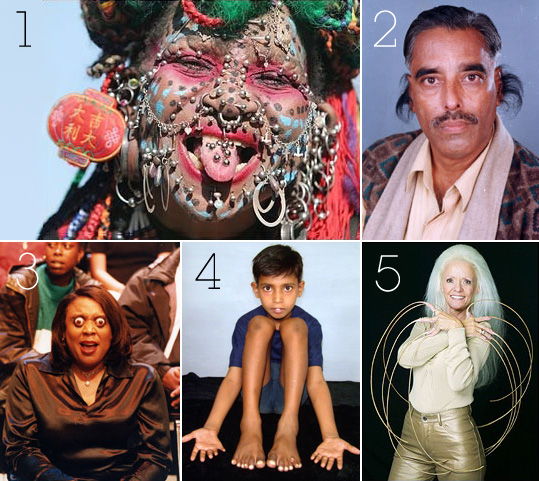
            The Guinness Book of Records is a book published annually, containing an internationally recognised collection of world records, both human achievements and extreme facts of the natural world. It was first published in 1955, and has shown people doing outrageous feats, such as the fattest man/woman, or the most swords swallowed by a person.


            The tallest man in history was Robert Wadlow, who grew to a height of 2.72 m. The tallest woman alive measures 2.30 m. The most pierced woman had, up to 2002, 720 piercings on her body, including 192 on her face alone. Kim Goodman of Chicago, Illinois, can pop her eyeballs out at least 11 mm beyond her eye sockets. A lady in Canada gave birth to a 10.8-kg boy in 1879, who unfortunately died 11 hours later. The land speed record is held by a British man, who in 1997 reached a speed of 1,227 mph in a super sonic car which generated a shock-wave and a massive sonic boom.


Deep Sea Creatures 

            Deep under the surface of the sea, where light no longer can penetrate, live a large number of strange-looking creatures. Some of these areas can be up to 11 km deep, and most of it is unknown territory. Conditions at these extreme depths are very different to those on land: temperatures are lower, pressures are higher, and food is sparsely distributed, so the life that exists down there has to be well-adapted. There is no plant life, because there is no light for photosynthesis.


            Some of the strange sea creatures which have been discovered are the following: the deep-sea dragonfish, which is a ferocious predator; the deep sea angler, a grotesque-looking fish that looks like a basketball with a large mouth full of sharp teeth; the gulper eel, one of the most bizarre creatures, which has a large mouth similar to a pelican’s beak, and it can swallow an animal much larger than itself.


WOMEN IN ART

This has nothing to do with English, but I found it so good that I couldn't resist putting it on my blog! I've already watched it several times and enjoyed it more each one. I hope you enjoy it too.


THE ABC OF A FRIEND

Look at all the things a friend is to you. Friends are forever, so care for them and cherish them. Real friends don't come easily.


ANIMAL FARM Links for studying

http://en.wikipedia.org/wiki/Animal_Farm

Read the novel online

http://www.mondopolitico.com/library/animalfarm/c1.htm


LINKS First Seniors for Unit Three test

First SeniorsJune 12th 

Simple past / Past Continuous

http://www.languageproject.co.uk/free_exercises/exercise_page.php?ID=75 http://a4esl.org/q/h/vm/pastpastcont.html  http://www.englisch-hilfen.de/en/exercises/past_progressive_questions.htm http://www.englisch-hilfen.de/en/exercises/past_progressive_questions2.htm http://www.angelfire.com/wi3/englishcorner/grammar/Interactive/pasprg1.html 

Were / was

http://a4esl.org/q/h/lb/waswere.htmlhttp://a4esl.org/q/h/lb/was.html 

 Used to / Didn’t use to

http://www.angelfire.com/wi3/englishcorner/grammar/Interactive/usedto01.htmlhttp://www.angelfire.com/wi3/englishcorner/grammar/Interactive/usedto02.html 

Question Words: Guess the correct answer and then check.

http://a4esl.org/q/h/9704/dg-wh.html 

They’re/their/there?

http://a4esl.org/q/h/mc-ttt.html 

Family relationships

http://a4esl.org/q/f/z/zz85bem.htm 

Online exercises Simple Past

http://www.better-english.com/grammar/past4.htm http://www.manythings.org/wbg/verbs_past1-sw.html http://www.isabelperez.com/happy/tenses/exercises/past_1.htmhttp://www.manythings.org/wbg/verbs_past2-sw.htmlhttp://ww2.college-em.qc.ca/prof/epritchard/regirreg.html http://www.englisch-hilfen.de/en/exercises/s_past3.htmhttp://www.englisch-hilfen.de/en/exercises/s_past1.htmhttp://www.englisch-hilfen.de/en/exercises/simple_past_negations1.htmhttp://www.englisch-hilfen.de/en/exercises/simple_past_questions.htmhttp://ww2.college-em.qc.ca/prof/epritchard/padisast1.htm  

Family Relationships

 http://esl.about.com/library/beginner/blfamily.htmhttp://www.better-english.com/vocabulary/relations.htmhttp://www.nonstopenglish.com/exercise.asp?exid=288http://www.nonstopenglish.com/exercise.asp?exid=755 

Past Continuous

http://www.englishtenseswithcartoons.com/verb/PastContinuous.htm

Simple past or Past Continuous

http://a4esl.org/q/h/vm/pastpastcont.htmlhttp://www.nonstopenglish.com/exercise.asp?exid=885 

Verb quizzes (for home study) 

Irregular verbs 1 • Irregular verbs 2  • Irregular verbs 3   • Irregular verbs 4 • Irregular verbs 5 • Irregular verbs 6 • Exercise Mix 1 • Exercise Mix 2 • Exercise Mix 3 • Exercise Mix 4 • Table - Fill-in exercisehttp://www.better-english.com/grammar/irregularverbs1.htm 

 Listening

http://www.elllo.org/english/Mixer/40-Resemble.html  

Listening

http://www.elllo.org/english/0151/Q196-Nicola-Twins.htm 

Listening

http://www.elllo.org/english/Games/G045-Horse.html 

FUN TESTS TO PRACTISE YOUR ENGLISH

Emotions

http://www.visualesl.com/drag/20.htm

Verbs

http://www.visualesl.com/drag/26.htm

Prepositions

http://www.visualesl.com/drag/16.htm


VIEWS OF EASTER ISLAND (HAVE YOU VOTED YET?)

THE NEW SEVEN WONDERS OF THE MODERN WORLD (only 34 days left)

If you have already voted for the new seven wonders of the world, good for you! If you haven't, there is still time to do it. Just go to the following link, http://www.new7wonders.com/index.php, and click on VOTE ONLINE, which will direct you to another page where you'll have to register your e mail and following that, you will receive via e mail a site to vote for seven of the twenty-one options. Please consider voting for our national option, the Easter Island moais. Remember, a chance like this will not be given for the next 2,000 years.


Statues of Easter Island (10th - 16th Century) Easter Island, Chile

Discovered on Easter Sunday, 1722 by Dutch explorer Jakob Roggeveen, this collection of 25 meter-high stone sculptures still puzzles historians and archaeologists as to its origins. It is believed that a society of Polynesian origin settled here in the 4th century and established a unique tradition of monumental sculpture. Between the 10th and 16th centuries, they erected the enormous stone figures, known as the Moai, which have long fascinated the entire world and endowed this island with a mythical atmosphere.

In short - vote for the Easter Island Statues, because they are a symbol of
- Mystery & Awe!

SECOND SENIORS DICTATIONS 9,10,11

Sharks            

           Sharks are amazing fish which have existed since long before the time of the dinosaurs. They live in waters all over the world, in every ocean, and even in some rivers and lakes. 

           Unlike bony fish, sharks have no bones; their skeleton is made of cartilage, which is a tough, fibrous substance, not nearly as hard as bone.

           Sharks may have up to 3,000 teeth at one time. Most sharks do not chew their food, but gulp it down whole in large pieces. The teeth are arranged in rows; when one tooth is damaged or lost, it is replaced by another. Most sharks have about five rows of teeth at any time.             
   

           Sharks are different from other fish.  They can only swim forwards, whereas other fish can also swim backwards. Sharks’ eggs are fertilized in the female’s body. Other fish fertilize their eggs in the water.  Sharks can range in size from eighteen cm long to fifteen metres long.

Jack the Ripper


            "Jack the Ripper!" Few names in history are as instantly recognizable. Fewer still evoke such vivid images: noisy courts and alleys, hansom cabs and gaslights, swirling fog, prostitutes decked out in the tawdriest of finery, the shrill cry of newsboys - and silent, cruel death personified in the cape-shrouded figure of a faceless prowler of the night, armed with a long knife and carrying a black Gladstone bag.


But by today's standards of crime, Jack the Ripper would barely make the headlines. Why is this symbol of terror as popular a subject today as he was in Victorian London?

            Because Jack the Ripper represents the classical whodunit. The case is an enduring unsolved mystery, which professionals and amateurs have tried to solve for over a hundred years. Between the months of August and November, 1888, the Whitechapel area of London was witness to a series of horrific murders, which remain unresolved to this day. He comes out from the fog, kills violently and quickly and disappears without a trace. The perfect ingredients for an everlasting thriller.

Earthquakes    

            An earthquake is what happens when two blocks of the earth suddenly slip past one another. The surface where they slip is called the fault. The location below the earth’s surface where the earthquake starts is called the hypocentre, and the location directly above it on the surface is called the epicentre.


            The earth shakes when there is an earthquake because of the movement of the tectonic plates which form a layer on the surface. These plates are like the pieces of a puzzle, and they keep moving around slowly all the time. The edges of the plates are called plate boundaries and these are made up of many faults . Most of the earthquakes around the world occur on these faults.

             To measure the intensity of earthquakes, scientists use an instrument called a seismograph, which records the movements on a strip of paper, called a seismogram. An international scale shows the magnitude of an earthquake.

The scale goes from 1 to 12, and Chile is the country which has had the strongest earthquake in the world.


STRIP CARTOON

FIRST SENIORS DICTATIONS Nº 8,9,10


         Charlie Brown

 This fictional character has been living with his pet dog Snoopy in a small American town since 1950, when he first appeared in the strip cartoon Peanuts .  Charlie Brown has been popular for almost fifty years, and he still experiences all the happiness and frustration of a typical boy, playing baseball with his friends and going to school.  His first appearance in a TV film was in 1965, and so far he has made several films and many videos.  His appeal is as strong as ever, and his adventures have been translated into many different languages all over the world. Each of the characters that are appear with him has his or her own peculiar personality: Lucy, the eternal grouch; Schroeder, his Beethoven-obsessed pal; Linus, with his security blanket: Pig-Pen, the dust-attracter, and so on.

Armadillos


         Armadillo is a Spanish word which means 'the little armoured one'. An armadillo is a little mammal with a bony covering that is like an armour.  There are ten kinds  of armadillos, which live from southern United States to southern South America. The upper parts of armadillos are covered with bony shells. These include one on the head and two solid pieces on the back. These two pieces are connected by a flexible centre section made up of movable bands, and they enable the armadillo to twist and turn.


         Curiously, an armadillo's teeth are very soft, so it has to eat soft food, such as ants, termites, larvae, grubs and bugs. It has to dig to find its food, using long, strong claws and powerful forearms.

          They mostly protect themselves by digging and running away. It is only one kind which rolls itself into a ball, to avoid being eaten.


Pizzas


         Pizza, like most fast food, started off  as a peasant food.  It was simple, cheap and filling, and usually very good as it was made of local ingredients. And then it came into contact with the USA, and the USA corrupted it.  The USA, as we all know, is a land of plenty, and so when the food of immigrant peasants was transported to the USA, it got upgraded, or downgraded, depending on your point of view.  In the case of pizza, the simple combination of a thin, crisp dough base and intensively flavoured tomato purée, cheese, anchovies, etc. was turned into an industrialised production process. The dough was mixed with sugar to make it sweet and injected with fat to make it easy to eat, and then it was topped with almost everything you can imagine – vegetables, meat and even fruit!


BUZIOS.... Super relaxing !